Family Link Account Share Google Photo's With Parent
Read update
- The article has been updated to be in line with Google's latest rules when it comes to Family Link and child accounts.
Children under the age of 13 can't create an unsupervised Google account for themselves. Instead, parents have to ready the accounts for them using Family Link, which is supposed to give them a lot of control over what apps and games kids can get, how much screentime they're immune, and which websites they tin visit. Parents tin even get a streamlined overview of their kids' app usage à la Digital Wellbeing. Merely what does it feel like to sit on the receiving terminate of the organisation? Needless to say, kids seem to hate the service, and they're song nigh information technology; the Family Link for kids app has a staggering boilerplate rating of 1.4 stars on the Play Store.
I wanted to see what exactly is up with Family Link and if it really deserves the hate it's getting, so I locked myself into a kid account. Meet Inferior Vonau, my fictitious 6-year-old, who used a kid-condom Pixel 3 for a week.
Getting started
Setting up a kid account is pretty straightforward. Yous can do it on a make-new device or create a second profile on a telephone already in utilize with another account. I opted to manufactory reset my quondam Pixel 3 and started afresh. Google leads you through the mandatory parental consent and explains how the Family Link service works: Parents can see stats, enforce age restrictions, gear up app limits and filters, control which apps can be installed, and and then on.
There are substantially 2 tiers of Family Link controls: Children under 13 have much stricter limits by default and can't utilize many Google services, while accounts for kids older than 13 don't need to be prepare up via Family Link. If parents want to, they tin can still connect older children'south accounts and supervise them via the service, though teenagers can turn that off from their stop. (These are the conditions in the US and in many parts of Europe, but the verbal ages and options may vary by country.) I wanted to come across what things are similar for kids under 13, which is why I made Junior half dozen years old.
Since I had to get through my usual workday despite using a kid account, I lifted as many restrictions equally I could: I immune my 6-year-old cocky to install apps without permission, including those that are 18+ (like Twitter and Telegram, you muddy minds!), and enabled sideloading support. I could've lifted the mature sites filter, too, but I wanted to see if it would interfere with my regular telephone usage in any way.
YouTube
YouTube used to exist the biggest pain indicate for whatever kid nether xiii. Earlier February 2021, YouTube was but completely off-limits for kids. Google initially decided to do this in oder to show regulators and advertisers that it was serious virtually protecting children from inappropriate content, but YouTube Kids, the extra app the visitor created that was supposed to safe-guard children, simply proved to be too limited. The limitations were becoming fifty-fifty more problematic when the pandemic struck, as teachers weren't able to share educational videos with kids using supervised Android and Chrome OS devices.
Luckily, that's in the past. When setting up a kids account at present, y'all can select to give them access to "supervised experiences" on the regular YouTube app. There are 3 tiers of protective layers, and Google is using a mixture of user input, machine learning, and human review to determine which videos to include in each level. Features like livestreams, comments, live chats, and whatever create options are unavailable for kids, and parents accept total access to view and search history. You tin read more than most limits and features in our dedicated article here.
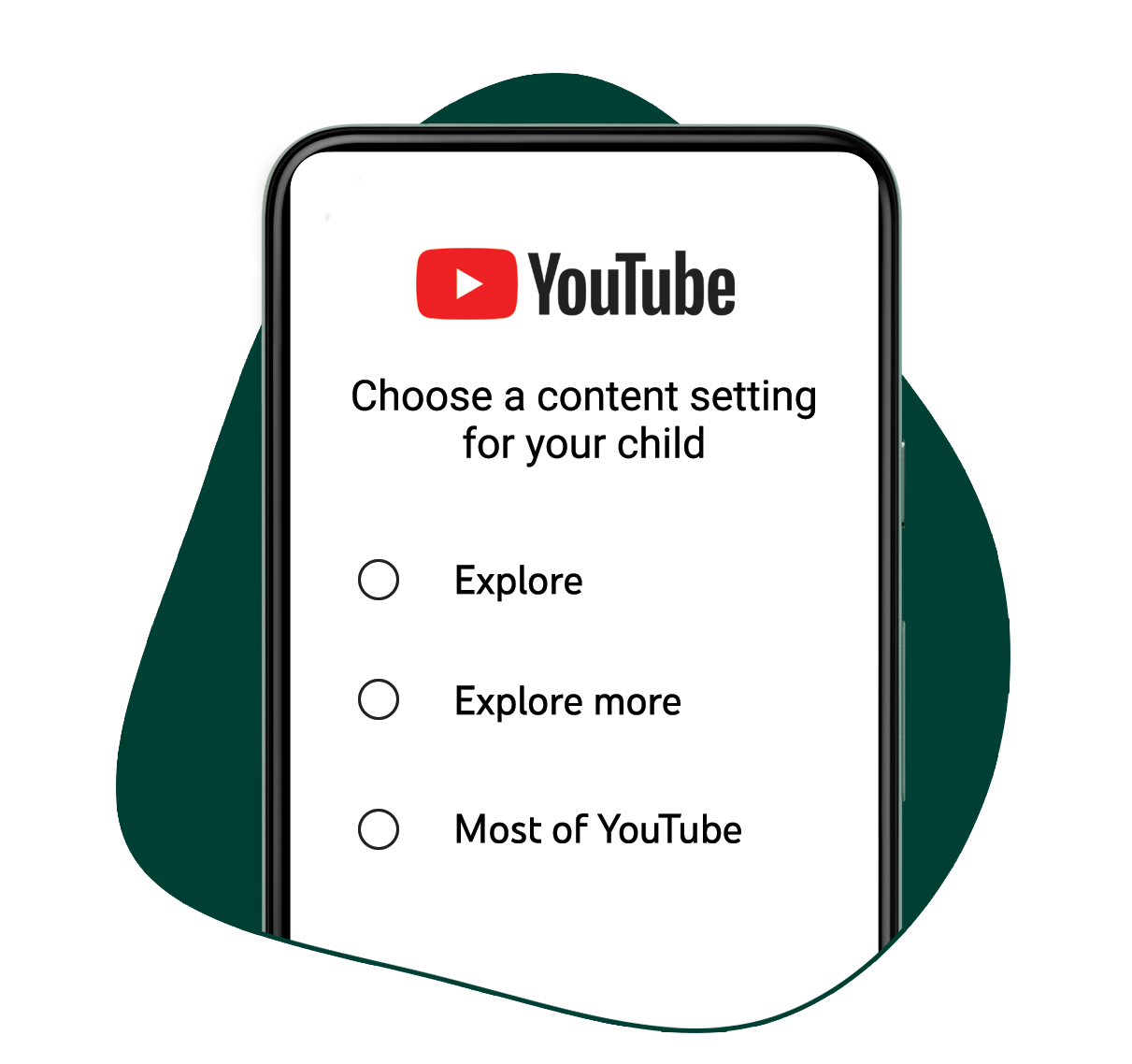
Unfortunately, YouTube Music still isn't accessible for kid accounts. That ways that people who have previously relied on Google Play Music to provide their whole family with music were essentially forced to switch to another service similar Spotify, which is bachelor for kids. At to the lowest degree Google has promised to bring YouTube Music to kids in the future, though the company hasn't shared when that volition happen. The subscribers information technology has lost likely won't return, though.
During my initial test earlier this year, losing the YouTube app was one of the biggest pain points, only back and so, I only installed Firefox to access the mobile site instead.
Third-party apps
Now, continue in heed that an app similar Firefox may work fine for me, but the third-political party browser doesn't respect the website restrictions yous might want to impose on your child — that'due south the case for whatever third-party app not made by Google, and then be certain to screen which apps yous allow on your child's phone. If you but want your child to visit a specific subset of websites, you'll have to stick with Chrome and won't be able to apply the browser workaround for YouTube and other blocked websites. If you were thinking, "Why not just use Chrome'south incognito mode," I'm sad to inform y'all that it'due south not available on children's accounts. At that place's a reason why sites like VideoLink withal have to be.
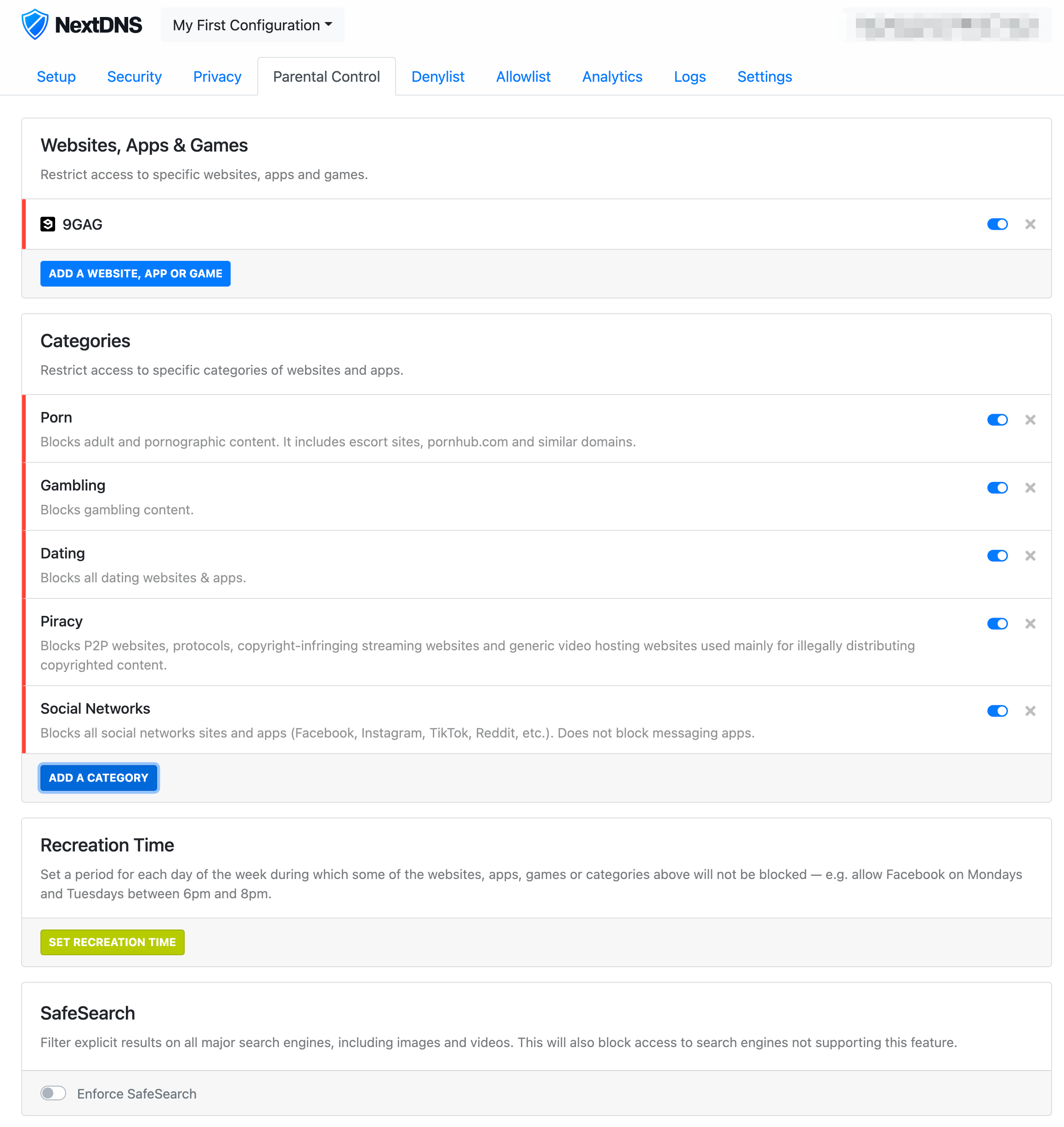
If y'all absolutely practise need or desire your kid to apply an app that might not be 100% child-friendly like a tertiary-party browser, you might want to look into a service like NextDNS. Information technology'south a private D omain N ame lookup S ervice that acts like a customizable firewall for your dwelling house network or private devices, and you can use it to cake content you don't want your child to be able to view. The trouble is that DNS settings can exist changed on Android without parental approving, so it's not a foolproof technique. If you want to make certain that your kid can't break out of the protected environment, adding a secondary router with NextDNS enabled and its ain Wi-Fi network might exist your all-time bet, though that introduces new issues for your kids with things like Chromecast and network-based printing.
Y'all could employ Cloudflare'southward family DNS instead, which automatically blocks developed content, if yous adopt a less restrictive arroyo for your whole dwelling house network.
In-app purchases
In-app purchases are the bane of any family manager's existence. While nearly purchased apps are automatically shared with all Google Family members, that doesn't utilise for in-app purchases. That makes sense for some IAP items like in-game currency, but when apps rely on Google's payment organisation to unlock features or total variants, you'll run into bug. I couldn't apply my preferred Reddit client Sync without ads because I had opted for the in-app purchase instead of the standalone Pro version. That'due south no biggie for a $3 app, just it'south significantly worse one time you get to more expensive IAPs or if you have several kids.
Android Police founder Artem Russakovskii ran into that issue when he wanted to ready new tablets for his kids. He got a couple of learning apps from Originator Inc., a company specialized in education and entertainment apps for kids. Information technology offers the full versions of its services as in-app purchases, which Artem got with his ain business relationship — every bit nosotros learned, that means these aren't available for his kids.
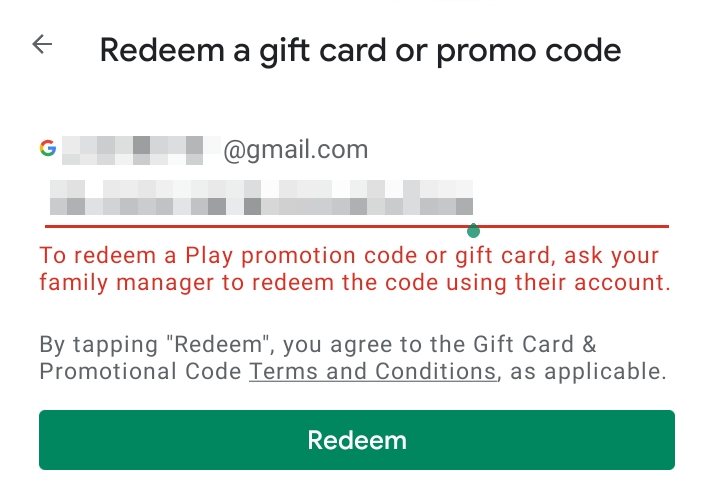
The developers were kind enough to offer promotion codes worth most $66 per account to become around the IAP sharing block, so it would seem like they successfully managed to play a joke on the arbitrary limitation. But here'south the kicker: When Artem tried to redeem the codes via his kids' accounts, he got an error, telling him that only family managers can redeem codes. That would be him, the person who already purchased the IAPs in question. Other family managers accept been reporting like issues, then information technology's not an edge instance barely anyone runs into.
And every bit you lot can tell from the screenshot below, children besides aren't allowed to redeem regular souvenir cards, then don't fifty-fifty think near gifting them some Play Store credit for games on Christmas.
We're going to take to point to Apple for an case of how it should be washed. In 2020, the visitor appear that it would permit families to share in-app purchases, provided developers give their permission. Information technology seems like the best of both worlds: Developers decide which IAPs tin exist shared on a instance-by-case basis, making it possible to block sharing for in-game currencies and such. I can't think of a reason why Google wouldn't adopt a like policy.
We reached out to Google multiple times, request the company if information technology plans to introduce a similar IAP sharing option and what it would currently propose in cases like Artem'due south, merely we haven't heard dorsum earlier publishing.
Gaming
Kids being kids, they're probably going to want to play a game or two on their phone or tablet. Only Google won't brand it easy for you to sync progress to the cloud. The visitor'south extensive tool for that, Play Games, isn't available for kids under thirteen. That ways you'll have to hope that game developers have implemented their ain mechanisms for syncing, and if they don't, you might be out of luck in one case it's time to upgrade your kids to a new phone or tablet.
The result barely affects me since I basically never play games on my telephone, and so I'll have to indicate to Artem's feel again. He reports that he had to sync game progress to his own Facebook account as a workaround for 1 item game. That's idiotic, simply at least it works in this case.
If y'all're keen on sharing your Stadia games with your kids, you'll exist happy to hear that you just need to set up your kid's account and activate Family unit Sharing in the Stadia settings. All of this tin can be done in the web interface on stadia.com.
Google logins in third-party apps
Two apps I usually sign into with my Google account.
A while ago, Google didn't let children to sign in to 3rd-party apps and services with their Google accounts, but that changed in 2021. Past default, children have to ask their parents for approval when they want to use their accounts to sign into apps and services, but at to the lowest degree it's at present possible to use this sign-in method in the first place.
In the past, if you wanted to become your kid a service like Pushbullet that just relies on Google for hallmark, yous'd be out of luck. Most services offering their own logins these days, only people often run across ane or two oddballs that don't.
Google apps and devices
While the YouTube woes might by and large be solved, there are notwithstanding a lot of limitations to run across with other Google apps. By default, in that location's a child-safety filter that blocks sure websites in Chrome and Search, but that wasn't a problem for me during my experiment. Kids additionally tin't utilise incognito mode at all, neither in Chrome nor in the Google app (usually accessible by tapping your account avatar -> use without an account). They also can't admission the Discover feed — there'southward just a blank page with the Google logo on the leftmost dwelling house screen. I wonder why the screen isn't disabled past default correct after setup.
Left: Where's the Notice feed? Middle: You can hit Install, but information technology won't install. Right: Playing podcasts marked as explicit on a kid account?
Kids also don't have access to a whole slew of apps in addition to the ones mentioned earlier: Google Pay, Opinion Rewards, Google News, and Google Fit. They also can't visit the Google Store website, and Google Duo has some restrictions where kids tin simply be reached past contacts saved to their business relationship. There might be even more than restrictions, only these are the ones I've run into. With some of these apps, you could contend that Google wants to protect children from unsuitable content, only and then I don't quite go why I was able to use Google Podcasts on my child business relationship and could play content marked as explicit.
Most annoyingly, children aren't immune to add secondary Google accounts to their phone other than Education accounts. That means I could neither access my personal nor my work electronic mail — though that might exist a trouble specific to someone who isn't actually a kid. (If an adult needs to borrow a kid's telephone for a few days, they could but create a second user in system settings where they could sign in with their Google accounts.)
Wear OS is another problem for locked down accounts — kids but can't install the Wear OS app on their phones, which is necessary to fix and connect a Wear OS watch. Limiting Wear OS devices to proper Google accounts seems similar an arbitrary decision that doesn't practise much to protect children from anything. It'southward particularly weird when you consider that Google and Nest Home devices piece of work with kids accounts without problems. And these have the potential to expose kids to unwanted content, as one of our commenters beneath told us whose three-year-old managed to overcome the YouTube restrictions by using Google Image Search on a Nest Hub (that kid is going places for certain!).
I could work around some of these issues. My bank has an NFC payment system of its own, and I turned to Firefox for the other forbidden apps and services again. But call up that I was merely able to install Firefox because I gave myself the permission — if you want to have a fool-proof mode to preclude kids from visiting certain websites, you tin't allow them install Firefox.
At least kids tin can sign upward for beta releases on the Play Store — no limitation at all there.
Development
Sometimes you might want to sideload apps on your kids' devices, and I'm happy to report that that's possible on Android phones and tablets. Y'all tin also actuate developer settings for your kids' phones if you want to tweak some settings. Both of these options tin can be institute in the Family unit Link app under device settings. Keep in mind that activating developer settings could also allow your kid to plough off Family Link supervision. And fifty-fifty if yous let apps from unknown sources, rest at ease — kids still can't install the collection of forbidden Google apps from APK Mirror.
Chromebooks
If you get your child a Chromebook, you'll run into similar, if not worse, restrictions. Like on Android, children aren't allowed to utilise incognito mode, and parents tin can manage which websites kids can visit. Chrome will too block as many sexually explicit and violent sites equally possible.
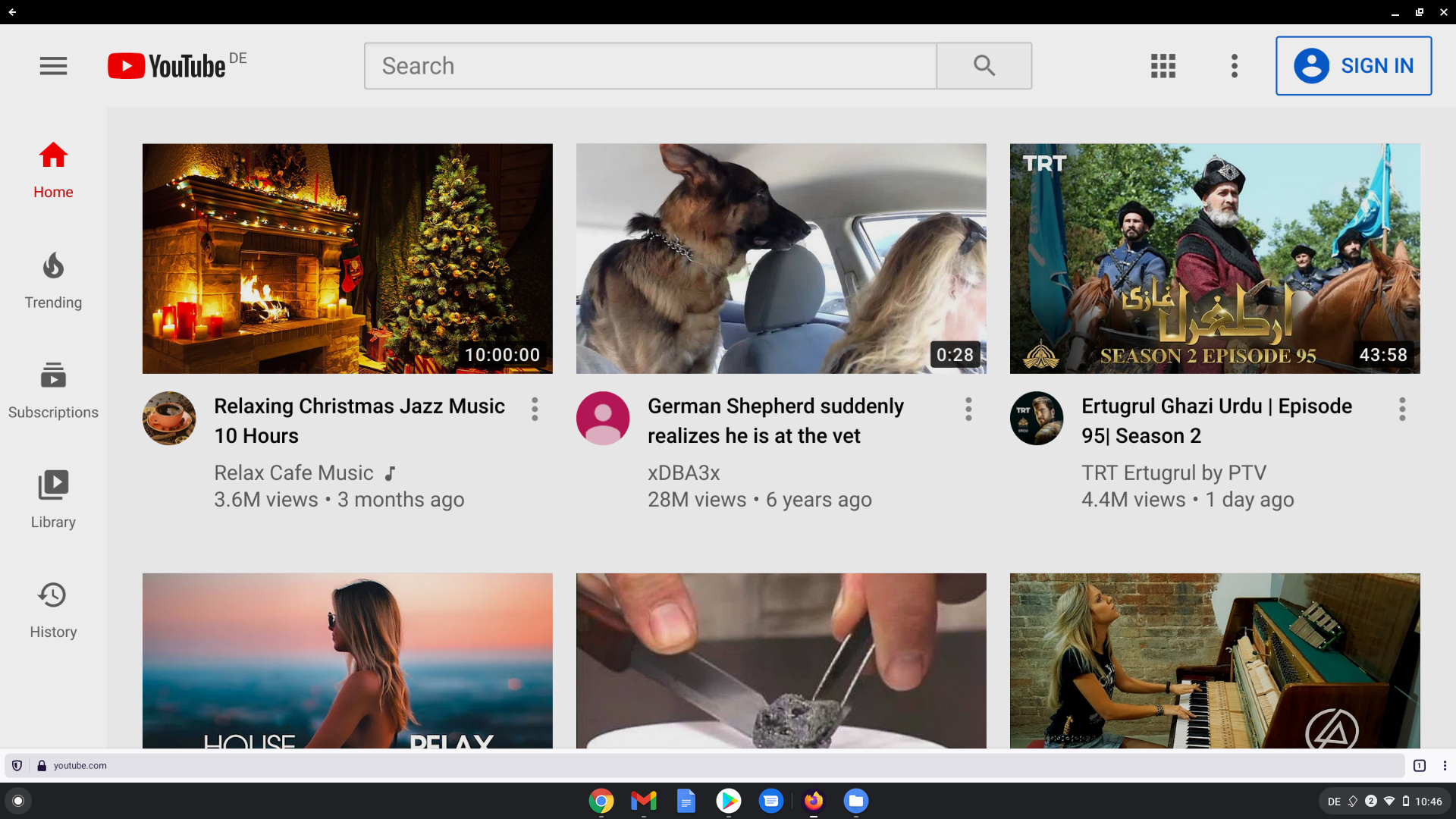
Above: Firefox on a Chromebook ain't exactly pretty. Below: Something like Vivaldi is the improve choice hither.
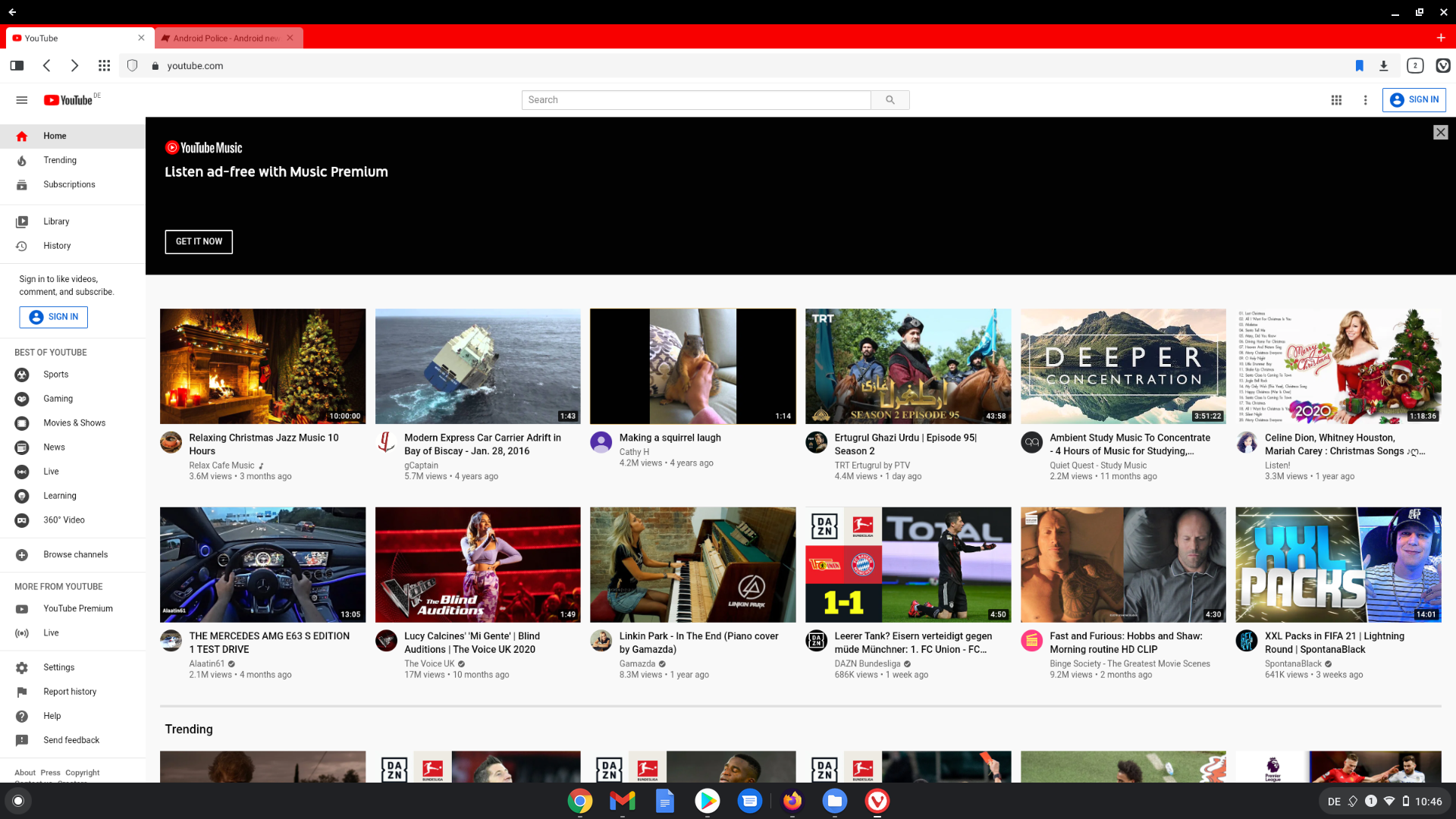
Chromebooks don't run any browser other than Chrome out of the box, merely thanks to Android app support, I could install Firefox and apply it to access forbidden services and other Google accounts. I quickly switched to Vivaldi because of ameliorate scaling and a proper tabbed interface, though. Again, parental website restrictions don't apply to tertiary-political party browsers, and so if y'all want to avert giving your child admission to all of the internet, use these with circumspection.
Family Link settings for Chromebooks (left) and Android phones or tablets (right).
If yous need to sideload an app for a child under 13 on a Chromebook, you're out of luck, though. To sideload apps on Chromebooks, you need to temporarily terminate supervision on a kid'southward business relationship in the Family Link app, which can merely be done for or by teenagers. You lot also can't install Linux apps on a kid's Chromebook.
Calculation browser extensions is possible, but not really comfortable. In contrast to Android app installations, which can be approved remotely, kids have to bring their physical device to their parents who so have to enter their own Google account passwords to allow an add-on. That's still a big improvement over the way things were — children used to be completely unable to install extensions.
At least Google recently improved the Family Link setup procedure, streamlining everything well-nigh it.
Family Link administration
I didn't have much administration to do while supervising myself, but many parents who practice have a few complaints. A Twitter user shared that fourth dimension limits employ to all of a kid's devices, so the five-hour allowance on a Chromebook bought for remote learning likewise extends to the telephone. Another parent shares that bonus fourth dimension is granted in the class of hard limit instead of 1 that simply counts active usage time, so even when yous want to grant more time for homework or something, you might be confronted with an unintuitive UX mostly aimed at postponing bedtime.
Google recently added the choice to e'er allow certain apps, which is an improvement. Simply you still can't group apps to exist "immune at all times" when you impose daily limits, which would brand granular controls much easier.
I ran into quite a few limitations during my week with a child business relationship, only many of them tin can be mitigated with workarounds. I'd imagine that the story might be different for families who really want to employ some of Family Link's restrictions to protect their children, but overall, many obstacles can be overcome if needed.
But despite my relatively graceful experience with Family unit Link, in that location are nonetheless some egregious issues with the service that absolutely need to be addressed, regardless of how much you want to protect your children online. There's no reason why in-app purchases shouldn't be shareable with other family members, especially since bought apps are available to everyone. So at that place are the convoluted YouTube restrictions, peculiarly when it comes to YouTube Music. Its predecessor, Play Music, used to be available to all ages, and then the sudden shift is arbitrary and probably fabricated many families switch to the competition.
(Past all means, restricting certain videos for children makes perfect sense, only the electric current approach is leaning also far to the restrictive end and feels like a rough-and-tumble solution for a too-long-ignored trouble — that topic is plenty material for another article, though.)
But that's not wherethe negative Play Store reviews come from. When you lot scroll through the Family Link for children & teens list, you'll see many children who seem to suffer from overly controlling parents. Family unit Link can be used until kids are eighteen, and many reviews appear to come from teenagers over 13. They complain about their parents imposing strict bedtime limits and app limits. Teenagers older than xiii can technically terminate supervision at whatever time, simply they offset need to know that that's a possibility andthey notwithstanding need to deal with their parents, who will exist notified when they try to remove them as supervisors.
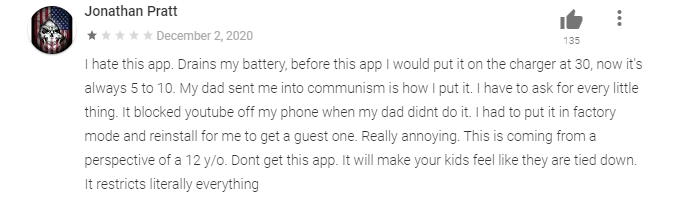
As someone who doesn't have kids (yet), I think a tool like Family Link has to be used carefully and in cooperation with children. But the fact that parents fifty-fifty have the choice to completely lock down a 17-year-sometime's phone seems horrible to me — at that age, I wouldn't be comfortable at all having someone run into everything I practice on my phone or computer.
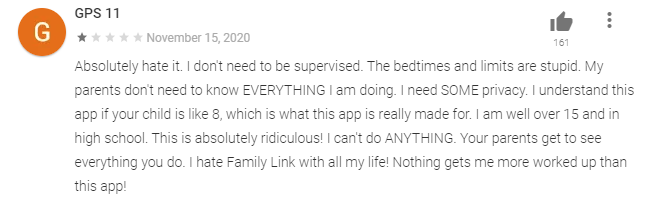
Google has done a lot to brand Family Link amend over the last year or two, only it'south clear that in that location'south still room for updates that would make the service much less frustrating. The company absolutely needs to fix IAP sharing, and I wouldn't mind if it dialed back some of the extensive control options over older teenagers.
UPDATE: 2021/09/05 seven:56am PDT By MANUEL VONAU
The article has been updated to be in line with Google's latest rules when information technology comes to Family Link and child accounts.
Thank you: Paddy O'Reilly, Manbearpig, Jeff
About The Author 
Source: https://www.androidpolice.com/2021/09/05/read-this-before-you-create-a-google-account-for-your-kid/
0 Response to "Family Link Account Share Google Photo's With Parent"
Publicar un comentario